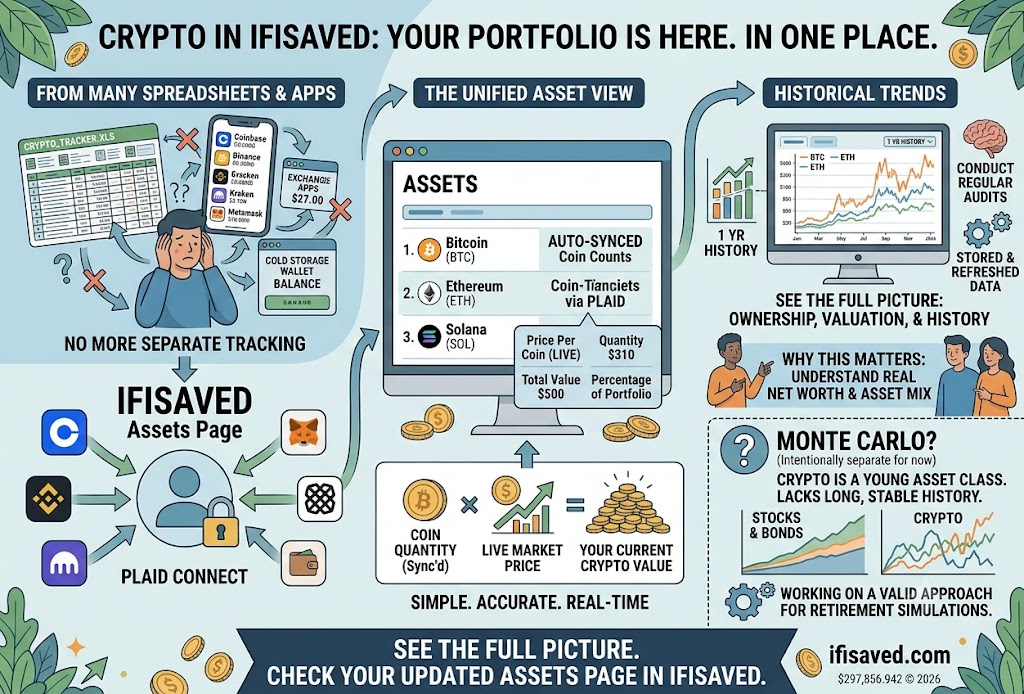
Crypto is no longer something you need to track in a separate spreadsheet, a wallet app, and a handful of exchange logins. We have brought crypto into IfISaved so you can see it alongside the rest of your financial life — the holdings, the current price per coin, the current value, and the history that shows how it has changed over time.
How It Works
We pull the account information through Plaid, which gives us the coin counts and the account details for connected crypto holdings. That means the quantity of bitcoin, ethereum, solana, or other supported coins stays synced automatically as your linked accounts change.
To calculate the valuation, we use live exchange pricing from a market data source rather than relying on Plaid for the price itself. That gives you a much better picture of what those holdings are actually worth right now. The result is simple and useful: coin count multiplied by current exchange price equals current value.
That same pricing data also powers the historical chart on the Assets page. Once the prices are stored and refreshed, we can show how your crypto portfolio has moved over time instead of only showing a single snapshot. You get the full picture: how much you own, what it is worth, and how that value has changed.
Why This Matters
Crypto often gets treated like a separate bucket, but for most people it is part of the same long-term financial story as cash, retirement accounts, and taxable investments. Seeing it in one place makes it easier to understand your real net worth and how your asset mix is changing.
That matters whether you are buying and holding, dollar-cost averaging, or simply trying to keep a clean record of what you own. If your portfolio lives across multiple exchanges or wallets, pulling it into IfISaved helps reduce the guesswork and the manual work.
What About Monte Carlo?
Crypto is not yet part of the Monte Carlo retirement calculation. That is intentional for now. Monte Carlo models work best when they have long, stable histories to draw from, and crypto is still a relatively young asset class compared with stocks, bonds, and cash.
That does not mean we are ignoring it. We are actively working through how to include crypto in a way that makes sense for retirement simulations. Because the asset class is newer and more volatile, there will likely need to be assumptions and user-selected options that reflect different ways people actually hold crypto — from aggressive growth portfolios to smaller speculative allocations or long-term cold-storage positions.
We want to get the calculations right so the simulations stay useful, understandable, and honest about the uncertainty involved. The goal is to give you sensible choices for how crypto should be treated in a retirement model, not to pretend it is the same as a mature market with decades of data.
See the Full Picture
This update is one more way we are trying to give you a complete view of your financial health and your path to retirement. By pulling crypto into the same place as your other accounts, we make it easier to track what you own, what it is worth, and how it fits into the larger plan.
Check it out on the Assets page and see how much simpler it is when everything lives in one place.